

Every Pharma Business Director Wants to Sell. But Is Your Business Really Built for Growth?
Every Sales Director wants more sales. Every Business Development Director wants more business. Every Managing Director wants the company to grow. But sustainable growth requires more than simply having a good product.
In international business, problems are everywhere.
Without problems, there would be no need for strategy, development, new partnerships, better processes, or new ideas.
While looking at different sectors of international business, I identified more than 40 challenges that can affect business growth.
Today, I want to discuss just one of them.
Selling.
Every Business Development Director wants more business. Every Sales Director wants better sales. Every Managing Director wants the company to grow.
But are you really building a business that is designed to sell continuously — or are you simply waiting for business to come?
Business Is Not Only About Researching Products
In the pharmaceutical industry, manufacturers invest heavily in products.
They have R&D teams, manufacturing facilities, regulatory expertise, certifications, production capacity, quality systems, and distribution capabilities.
But business development is not only about researching products or finding customers.
It is about building a structure and a plan where the best possible outcomes can be created day after day.
A successful market is rarely built through one transaction.
It is built through continuous product development, customer identification, relationship building, regulatory understanding, commercial activities, follow-up, market intelligence, and strategic execution.
That is how a product becomes known.
That is how a company becomes trusted.
And eventually, that is how a company becomes a brand in the market.
Are You Really Following This Process?
Now ask yourself a difficult question:
Is your business really following this process in every important market?
If the answer is no, you may already be moving behind your competitors.
Look at the companies that are leading your market.
Many of them did not become market leaders because they made one successful sale.
They built their position over time.
Eventually, customers began to recognize their name.
You don't want business only once.
You want a market that continues to generate business.
You don't want to be remembered only when a customer needs a particular product.
You want to become one of the companies customers naturally think about when they make a purchasing decision.
You need a brand, not just a transaction.
Your Manufacturer May Have Everything — Except a Market Plan
This is where an interesting situation appears in international pharmaceutical business.
Many manufacturers already have enormous capabilities.
Manufacturing
Multiple plants, advanced facilities and strong production capabilities.
R&D & Quality
R&D, regulatory expertise, certifications and quality systems.
Commercial Capability
Product portfolios, capacity and international distribution potential.
On paper, everything may look ready.
The manufacturer may even have direct customers in a particular country.
But then something happens.
Growth stops.
Why?
Sometimes the problem is not the product.
Sometimes it is not the manufacturing capacity.
Sometimes it is not even the market.
The missing element may simply be a clear market-development plan.
A manufacturer can have the capacity to run at full speed but still fail to develop a particular market because nobody is continuously working on how to move that market forward.
Who should be approached?
Which customers should be prioritized?
Which products have the strongest opportunity?
How should the company position itself?
Which competitors are already established?
How should customer relationships be developed?
Who will visit customers?
Who will collect market intelligence?
Who will turn opportunities into actual business?
These questions require more than a product catalogue. They require structured market development.
Then Look at Your Existing Business Partner
This brings us to another important question.
Is your existing business partner really contributing to this effort?
Don't judge your partner only by the orders they have generated.
Look deeper.
Ask your partner:
And perhaps the most important question:
Are they working with you as a business partner — or simply waiting for customers to come to them?
There is a major difference.
A partner who only receives enquiries can help you process business.
But a partner who actively develops the market can help you create business.
The right partner does not simply stand between the manufacturer and customer. The right partner can become part of the manufacturer's market-development engine.
Which Way Can You Dominate the Market?
There is another question that every business leader should ask:
What is the best way for us to dominate this market?
And don't assume there is only one answer.
There may be several.
The important thing is to stop thinking only:
“How can we sell this product?”
And start thinking:
“How can we build a position in this market?”
That change in thinking can completely change the way a company approaches business development.
And sometimes, one good strategic decision can remove months or even years of unnecessary pressure.
The Real Source of Sales
So, where does the sale actually come from?
Of course, sales require effort. They require communication, follow-up, negotiation, product quality, competitive pricing, regulatory compliance and strong relationships.
But effort alone is not enough.
Sales also come from deep thinking.
Thinking about the market. Thinking about the customer. Thinking about the product. Thinking about competitors. Thinking about positioning. Thinking about partnerships.
Thinking about what needs to happen today to create business tomorrow.
The strongest business development strategy is not necessarily the one that makes the most noise.
Sometimes, it is the one that quietly creates the right structure — and allows business to come naturally from that structure.
The question is not only:
“Can we sell?”
The bigger question is:
“Can we build a market where selling becomes a continuous process?”
More Articles
The Distribution of Pharmaceutical Demand Across Therapeutic Categories Offers an Important Signal for International Manufacturers Looking at Bangladesh

I quoted less than $600/ from my competitor, but the order closed at $2000/kg, So did they win? Behind the Reason-
Read More Articles
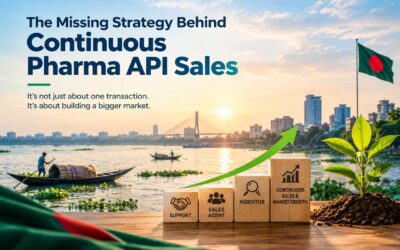
The Missing Strategy Behind Continuous pharma API Sales
Pharma API Business Development The Missing Strategy Behind Continuous Pharma API Sales A good product can win an order. But continuous sales require something more — a strategy for continuously developing the customer and the market. The real question is not only how...

You Don’t Always Need an Office in Bangladesh. You Need the Right Market Partner
Read More Articles
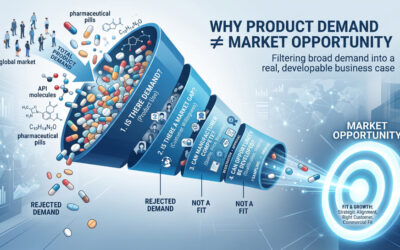
Why Product Demand ≠ Market Opportunity

Cross-Functional Approval Matrix: The Strategic Evaluation Framework Every International API Manufacturer Should Understand
Read More Artcle

Your Pharma Portfolio May Have an Opportunity in Bangladesh—But Are You Looking at the Right Products?

Why Approved Supplier Lists Matter in Manufacturing
Read More Articles
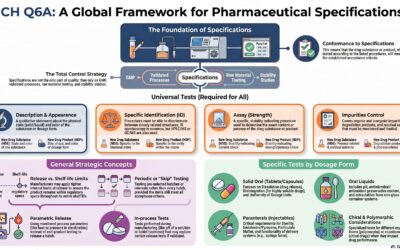
ICH Q6A: Chemical Substance Specifications and Test Procedures
Read More Articles

Tablet Granules Consistency & Density (Bulk and Tapped): Critical Quality Factors in Pharmaceutical Manufacturing
When a batch of pharmaceutical tablets fails in the compression room due to capping, lamination, or weight variation, the immediate reaction is often to adjust the machine settings or blame the rotary press. However, experienced production and QA teams know that the...