

My Competitor Closed at $2,000/kg. I Quoted $1,400/kg. So Why Did They Win?
A commercial lesson for international pharmaceutical API manufacturers: sometimes the battle is not won inside the quotation.
I quoted more than $600/kg lower than my competitor.
The buyer still placed the order with them.
At first, it doesn't make sense.
If the product is the same, the quality is acceptable, and my price is significantly lower, shouldn't I have won?
That is the moment many international manufacturers start asking the wrong question:
“Should I reduce my price even further?”
Maybe.
But often, price isn't the real problem.
The real problem may be everything surrounding the price.
The order looked almost closed.
Imagine this situation.
You have spent weeks discussing an API with a pharmaceutical customer.
The technical team is satisfied.
The quality documents have been exchanged.
The commercial discussion is moving forward.
Then comes the quotation.
Your price is $1,400/kg.
Another supplier is offering the same product around $2,000/kg.
You feel confident.
Then the customer tells you:
That feeling is frustrating.
Because you didn't lose by $50.
You didn't lose by $100.
You were more than $600/kg cheaper.
And suddenly you realize something uncomfortable:
You were competing on price.
But your competitor may have been competing on confidence.
Was it really about the price?
Not necessarily.
In pharmaceutical API business, the buyer isn't simply purchasing a chemical.
They are purchasing continuity, reliability, documentation, communication, technical support, quality confidence and supply security.
The API may enter a product that will eventually reach thousands—or millions—of end users.
So from the buyer's perspective, a cheaper kilogram can become very expensive if something goes wrong later.
- A delayed response can delay development.
- A documentation problem can delay regulatory submission.
- A quality issue can disrupt production.
- A shipment problem can create a shortage.
- A technical misunderstanding can create weeks of unnecessary work.
Suddenly, that extra $600/kg doesn't look like the entire story.
The hidden product behind your API
Here is the part many manufacturers underestimate.
When you sell an API internationally, your product is not only the API.
You are also selling:
- How quickly you respond.
- How you handle problems.
- How you support the customer's technical team.
- How you manage documentation.
- How seriously you treat their production timeline.
- How easily your customer can communicate with you.
- How much responsibility you take after the order is placed.
That is where the real competition often begins.
1 Don't just sell the API. Support the product.
A manufacturer may have an excellent API portfolio.
But what happens after the customer becomes interested?
Can you support product development?
Can you provide samples efficiently?
Can your team answer technical questions?
Can you support regulatory requirements?
Can you provide the necessary documentation?
Can you guide the customer through the available regulatory package?
Depending on the product and market requirements, this may involve documentation such as:
- DMF
- CTD-related documentation
- GMP documentation
- COA
- specifications
- stability information
- regulatory certificates
- other technical and quality documents
The point is not simply having documents.
The point is making the customer's job easier.
“Here is our DMF. Please check it.”
is providing information.
“Tell us what your regulatory team needs. We will coordinate with our technical and regulatory teams and support you through the process.”
is providing partnership.
There is a big difference.
2 Communication is part of your product
This sounds simple.
But it can quietly decide an order.
Imagine a Bangladesh customer sends a technical question on Monday.
The manufacturer replies on Thursday.
Then the customer sends another question.
The manufacturer replies next week.
Then the customer needs clarification from QA.
The email moves between departments.
Three days become seven.
Seven become fourteen.
Meanwhile, another supplier is communicating quickly.
Which supplier feels easier to work with?
The cheaper supplier?
Not necessarily.
The supplier who reduces uncertainty may become more attractive.
This becomes even more important when a manufacturer works through a local representative, agent or third party.
The customer should never feel:
There should be a clear communication path.
Fast communication. Clear ownership. Professional follow-up.
These are not small things.
They are part of your commercial value.
3 Your customer's production timeline should become your concern
This is where a supplier can move from being a vendor to becoming a partner.
Suppose the customer's development team has planned a production trial.
They need the sample.
Then they need the technical documents.
Then procurement needs the commercial offer.
Then QC needs clarification.
Then logistics needs the shipment.
If each department has to chase the supplier separately, the process becomes painful.
But imagine a supplier who understands the entire timeline.
Now the manufacturer is no longer simply asking:
They are asking:
“Did we help the customer successfully move the product forward?”
That mindset can change the relationship.
4 Become the manufacturer the customer wants to keep
There is a difference between:
and
If a technical issue appears, don't simply forward an email.
Bring the right people together.
If necessary, arrange a technical meeting.
If the customer needs clarification, coordinate with your QA, QC, regulatory or technical team.
If a serious issue requires physical discussion, consider a customer visit when appropriate.
The objective is simple:
Make the customer feel that someone is taking ownership.
Because when a problem appears, the customer remembers something very clearly:
Who disappeared?
And:
Who stayed?
5 Support every department—not only Procurement
One of the biggest mistakes in international API sales is thinking:
No.
Your commercial relationship may begin with Procurement, but the product travels through many departments.
If your manufacturer supports only one department, you are supplying a product.
If you help multiple departments move the product forward, you are building a business relationship.
6 Price strategy still matters—but price is only one part of the equation
This article is not saying that price doesn't matter.
Of course it matters.
A manufacturer cannot ignore market pricing and expect customers to accept any quotation.
But there is a difference between:
and
Those are two different strategies.
Sometimes a $1,400/kg quotation can lose to $2,000/kg.
Sometimes the $2,000/kg quotation may lose to $1,400/kg.
The important question is:
What created the difference in perceived value?
The first order is not the destination
This is perhaps the most important point.
Many manufacturers celebrate when the first order arrives.
But the first order is actually the beginning.
The real question is:
Does the customer reorder?
Does another product get introduced?
Does the customer recommend you internally?
Does the customer consider you for another API?
Does your product become part of their regular supply chain?
Does your relationship expand from one buyer to several departments?
This is where market development begins.
Make your product habitual
There is a powerful moment in pharmaceutical business development.
It is when the customer stops thinking:
and starts thinking:
“This is one of our regular suppliers.”
That is a completely different position.
The first order gives you an entry.
Successful support gives you credibility.
Consistent quality gives you confidence.
Reliable supply gives you continuity.
Good communication creates familiarity.
And repeated successful transactions create a relationship.
Step by step, the product becomes habitual within the customer's supply chain.
And once that happens, you are no longer fighting for every kilogram from zero.
You have established a position in the market.
So what actually happened to the $1,400/kg quotation?
Maybe the price wasn't the problem.
Maybe the customer was comparing two different things.
One supplier offered:
API + Price
The other offered:
API + Price + Documentation + Communication + Technical Support + Regulatory Support + Supply Reliability + Responsibility
Those are not exactly the same commercial proposition.
And this is why international pharmaceutical manufacturers should periodically ask themselves:
Before blaming the price, check yourself.
Ask your team:
- Do we support product development?
- Can we provide samples efficiently?
- Can we respond to technical questions quickly?
- Can we coordinate with QA/QC when clarification is required?
- Is our regulatory documentation organized?
- Can we support the customer's regulatory team?
- Can we provide the relevant documentation required for the product and market?
- How quickly do we respond?
- Who owns the customer when a problem occurs?
- Does the customer have to chase us for answers?
- Is our pricing strategy aligned with the market?
- Are MOQ and payment terms practical?
- Can we offer a commercially workable supply solution?
- Are we helping the customer plan deliveries?
- Are shipping documents handled accurately?
- Do we understand their production timeline?
- Do we know what the customer is trying to achieve?
- Are we building relationships beyond Procurement?
- Do we behave like a supplier—or like a partner?
If several answers are “No,”
then perhaps your next move shouldn't be another price reduction.
Perhaps it should be a better market-development strategy.
Because the cheapest supplier doesn't always build the strongest market.
The API industry is not only about moving kilograms.
It is about building confidence around those kilograms.
The first order is your first footprint in the market.
The second order tells you that the footprint is becoming stronger.
Repeated orders tell you that the relationship is becoming established.
And when customers begin asking for your next product before you approach them—
that's when market development starts paying back.
So the next time your competitor closes an order at $2,000/kg while you are quoting $1,400/kg, don't immediately ask:
“How much lower should I go?”
Ask a more important question:
“What is the customer receiving from them that they are not receiving from me?”
Because sometimes...
the difference between losing an order and building a market is not $600/kg.
It is everything that happens around the product.
Focused Partnerships. Sustainable Growth. Long-Term Success.
Bangladesh Pharma Gateway — Pharmaceutical Business Development Division of Total Data Solution.
Read More Articles
The Distribution of Pharmaceutical Demand Across Therapeutic Categories Offers an Important Signal for International Manufacturers Looking at Bangladesh
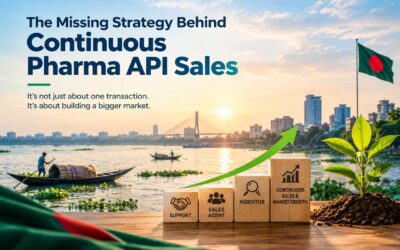
The Missing Strategy Behind Continuous pharma API Sales
Pharma API Business Development The Missing Strategy Behind Continuous Pharma API Sales A good product can win an order. But continuous sales require something more — a strategy for continuously developing the customer and the market. The real question is not only how...

The Desire of Every Business Director- “Sell”
More Articles

You Don’t Always Need an Office in Bangladesh. You Need the Right Market Partner
Read More Articles
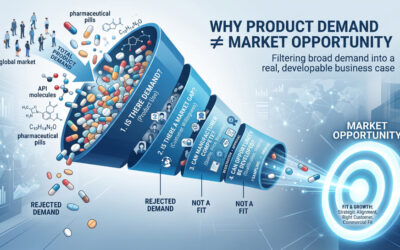
Why Product Demand ≠ Market Opportunity

Cross-Functional Approval Matrix: The Strategic Evaluation Framework Every International API Manufacturer Should Understand
Read More Artcle

Your Pharma Portfolio May Have an Opportunity in Bangladesh—But Are You Looking at the Right Products?
Why Approved Supplier Lists Matter in Manufacturing
Read More Articles
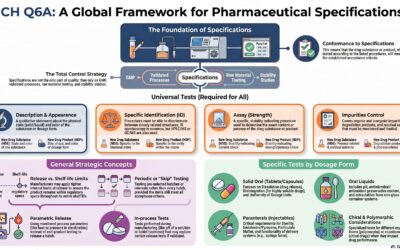
ICH Q6A: Chemical Substance Specifications and Test Procedures
Read More Articles

Tablet Granules Consistency & Density (Bulk and Tapped): Critical Quality Factors in Pharmaceutical Manufacturing
When a batch of pharmaceutical tablets fails in the compression room due to capping, lamination, or weight variation, the immediate reaction is often to adjust the machine settings or blame the rotary press. However, experienced production and QA teams know that the...