
Choosing a supplier is easy. Choosing the right supplier is much harder.
Many procurement problems don't begin with late deliveries or poor-quality products. They begin with one critical decision: awarding the first Purchase Order to the wrong supplier.
Before issuing your first PO, take time to evaluate the supplier beyond price. A thorough assessment prevents quality issues, production delays, unexpected costs, and damaged customer relationships.
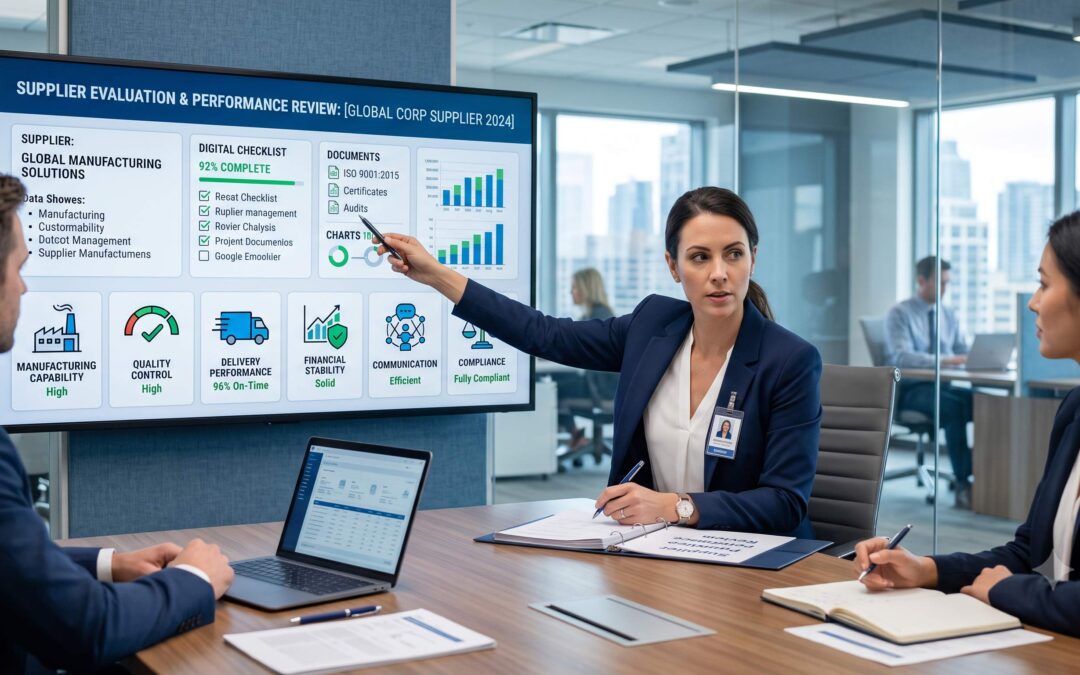
7 Areas Every Procurement Team Should Review
1 Verify the Company's Legitimacy
Start with the basics. Confirm that the supplier is a legally registered business with a verifiable address, website, and contact information.
A legitimate business should be transparent about its operations and corporate identity.
2 Evaluate Manufacturing Capability
Can the supplier consistently meet your required volume and specifications?
Review their production capacity, manufacturing equipment, quality systems, and experience with similar products. A supplier may produce excellent samples but struggle with large commercial orders.
3 Review Quality Management
Quality should be demonstrated—not promised.
Ask about quality control procedures, inspection methods, and certifications relevant to your industry. For regulated industries, verify compliance with applicable standards and documentation.
4 Assess Delivery Performance
A competitive price has little value if deliveries are consistently late.
Ask about average lead times, on-time delivery performance, and contingency plans for unexpected disruptions. Reliable suppliers prepare for delays before they happen.
5 Evaluate Communication
Strong communication is often overlooked during supplier selection.
Pay attention to how quickly the supplier responds, answers technical questions, and provides complete information. Good communication today reflects good operational discipline tomorrow.
6 Review Financial and Business Stability
A supplier experiencing financial difficulties may face production interruptions, workforce reductions, or cash flow problems.
Whenever possible, understand the supplier's business stability and long-term outlook. A stable supplier is more likely to become a reliable long-term partner.
7 Request References or Sample Orders
Before placing a large order, reduce uncertainty.
Request product samples, conduct a small trial order, or ask for customer references where appropriate. A pilot order provides valuable insight into quality, documentation, communication, and delivery performance before making a larger commitment.
Key Takeaway
The first Purchase Order is more than a transaction—it is the beginning of a business relationship.
The strongest procurement teams don't choose suppliers based only on price. They evaluate capability, quality, reliability, communication, and long-term partnership potential.
A few extra hours spent auditing a supplier before the first Purchase Order can prevent weeks of delays, unexpected costs, and operational disruptions later.