

You Don’t Always Need an Office in Bangladesh.
You Need the Right Market Partner.
Building a presence in Bangladesh does not always mean building an organization.
A pharmaceutical manufacturer can sell into Bangladesh without having an office here.
It can work through an importer, an indentor, a distributor, a trading partner, or even directly with pharmaceutical companies.
That is the interesting question.
Because the real issue is not always access to the market.
The real issue is:
“Who is actually working on the market?”
There Is a Big Difference Between Being Present and Being Active.
Bangladesh is already a serious pharmaceutical market. Local manufacturers meet the vast majority of domestic medicine demand, while the industry remains heavily dependent on imported APIs and pharmaceutical raw materials.
For international API, pharmaceutical, excipient and specialty raw-material manufacturers, that creates a significant commercial opportunity.
But opportunity by itself does not create business.
A catalogue does not create business.
A customer list does not create business.
And having one local contact does not mean a market is being developed.
Having a Customer Is Not the Same as Having a Market.
Imagine a manufacturer already has three customers in Bangladesh.
Everything looks fine on paper.
Orders are coming. Payments are being made. The company has a local partner.
So the natural conclusion is:
But is it?
What about the other products in the portfolio?
What about customers who have never heard of the company?
What about products that could fit Bangladesh but have never been introduced properly?
What about customers who received a sample months ago and never heard from anyone again?
What about feedback on pricing, competition, technical requirements and customer interest?
And perhaps most importantly:
Who is watching all of this?
That is where the conversation changes.
The Market Does Not Develop Itself.
International manufacturers often think about market presence in terms of infrastructure:
But infrastructure is only one part of market development.
A market also needs attention.
It needs somebody who knows what the manufacturer is trying to achieve.
Somebody who understands which products matter.
Somebody who knows which customers should be approached.
Somebody who keeps conversations moving.
Somebody who follows up after the first meeting.
Somebody who brings market feedback back to the manufacturer.
Somebody who notices when an opportunity is beginning to develop — and keeps working on it.
That is not simply market access.
That is market development.
Three Different Models. Three Different Jobs.
There is nothing wrong with direct business. There is nothing wrong with a traditional indentor or distributor. And there is nothing inherently superior about having a separate market-development partner.
The important question is:
Direct Business
Direct business offers maximum control.
The manufacturer can manage customer relationships, pricing, technical communication, commercial strategy and long-term account development directly.
For a company with sufficient local resources, this can be an excellent model.
But direct business also creates a requirement:
Someone has to do the work.
Someone has to identify customers, communicate, visit, follow up, understand the market and stay involved long enough for opportunities to mature.
Without local resources, “direct” can sometimes mean:
Traditional Indentor or Distributor
A strong local indentor or distributor can be extremely valuable.
They may already have customer relationships, import experience, commercial infrastructure, market familiarity and established channels.
That can make market access much faster.
But there is a structural question worth asking:
A local company may represent many manufacturers and many products.
Your portfolio may be one of dozens.
Your opportunities may be handled when an inquiry appears.
But what happens when the objective is not simply to receive orders, but to create new business?
The Dedicated Market Partner
This is where a different model becomes interesting.
A dedicated market partner is not simply another channel.
The role is closer to becoming a local extension of the manufacturer's commercial team.
The focus is not:
The focus becomes:
Then the work begins from there.
So What Does “Dedicated” Actually Mean?
This word is used very easily in business. But it should mean something.
Dedicated does not mean having your logo on a presentation.
It does not mean possessing your product catalogue.
It does not mean sending ten introductory emails and calling it business development.
And it does not mean waiting for customers to come.
- Someone understands your priorities.
- Someone studies the opportunity.
- Someone identifies the right targets.
- Someone develops relationships.
- Someone follows up.
- Someone records feedback.
- Someone communicates what is happening.
- Someone keeps working even when there is no immediate order.
You Don't Have to Build a Full Organization to Start Building a Market.
Building a full local organization is a significant commitment.
Before doing that, a manufacturer may still be trying to understand:
- Is the market large enough for us?
- Which products have the best potential?
- Who should we target?
- How strong is the competition?
- What type of local presence do we actually need?
- Should we invest now — or later?
There is often a gap between:
“We want to grow in Bangladesh.”
and
“We are ready to build our own organization in Bangladesh.”
That gap is where a dedicated market-development model can make sense.
What If You Could Build the Market Before Building the Office?
Instead of starting with “Do we need an office?” start with:
“Do we need someone who is actively developing Bangladesh for us?”
The Hidden Cost of an Undeveloped Market
Some costs appear on a balance sheet.
Others don't.
Sometimes the biggest cost in a market
is having no one truly responsible for developing the opportunity.
A Different Way to Build Bangladesh Business.
At Bangladesh Pharma Gateway (BPG), we are building a different kind of local market-development model for selected international pharmaceutical manufacturers.
Our role is not simply to provide another route to customers.
We work to understand the manufacturer's objectives, evaluate market opportunities, identify relevant customers, develop commercial relationships, coordinate opportunities, collect market feedback and maintain continuous business-development activity.
The manufacturer should not have to build a full organization just to ensure that someone is consistently working on Bangladesh.
The goal is not simply to become another channel.
The goal is to become a dedicated local extension of the manufacturer's commercial team.
The question is not whether you need an office.
Maybe one day you will.
But first, ask a different question.
Read More Articles
The Distribution of Pharmaceutical Demand Across Therapeutic Categories Offers an Important Signal for International Manufacturers Looking at Bangladesh

I quoted less than $600/ from my competitor, but the order closed at $2000/kg, So did they win? Behind the Reason-
Read More Articles

The Missing Strategy Behind Continuous pharma API Sales
Pharma API Business Development The Missing Strategy Behind Continuous Pharma API Sales A good product can win an order. But continuous sales require something more — a strategy for continuously developing the customer and the market. The real question is not only how...

The Desire of Every Business Director- “Sell”
More Articles

Why Product Demand ≠ Market Opportunity

Cross-Functional Approval Matrix: The Strategic Evaluation Framework Every International API Manufacturer Should Understand
Read More Artcle

Your Pharma Portfolio May Have an Opportunity in Bangladesh—But Are You Looking at the Right Products?

Why Approved Supplier Lists Matter in Manufacturing
Read More Articles
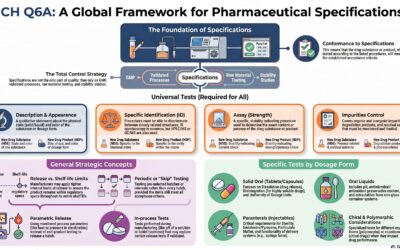
ICH Q6A: Chemical Substance Specifications and Test Procedures
Read More Articles

Tablet Granules Consistency & Density (Bulk and Tapped): Critical Quality Factors in Pharmaceutical Manufacturing
When a batch of pharmaceutical tablets fails in the compression room due to capping, lamination, or weight variation, the immediate reaction is often to adjust the machine settings or blame the rotary press. However, experienced production and QA teams know that the...