

A foreign pharmaceutical manufacturer sends a portfolio of 300 APIs to Bangladesh. The usual approach? Send the same list to 50 pharmaceutical companies, wait for inquiries, follow up, reduce the price, follow up again, and eventually conclude: “Bangladesh is a difficult market.”
But perhaps Bangladesh was never the problem. Perhaps the product selection was wrong.
Bangladesh manufactures roughly 98% of the medicines consumed domestically, yet the industry still depends heavily on imported APIs and raw materials. That creates an interesting contradiction:
A Tale of Two Molecules
Imagine evaluating two different Active Pharmaceutical Ingredients for market entry:
API A: The Red Ocean
- 40+ Bangladeshi companies market the molecule
- Multiple brands already compete
- Large formulation volume
- Several established API suppliers
- Buyers are highly price-sensitive
⚠️ Looks attractive due to customer count, but entry is extremely difficult due to supply maturity.
API B: The Strategic Gap
- Only 5–7 companies manufacture the formulation
- Requires stronger technical capability
- Fewer qualified suppliers available
- Therapeutic segment is expanding
- More local companies likely to enter later
✅ Current volume may be smaller, but long-term strategic opportunity is significantly higher.
Opportunity = Demand × Import Dependency × Customer Fit × Supply Gap × Entry Probability
Formulation vs. API Supply Competition
Suppose Bangladesh has 25 brands of Product X. Foreign manufacturers often interpret this as “the market is overcrowded.”
An API manufacturer should ask something completely different: “Who is supplying those 25 brands?”
Not every Bangladeshi pharmaceutical company is a realistic customer for every molecule. Target alignment depends entirely on therapeutic specialization:
The Portfolio Filtering Matrix
To convert catalog lists into actual revenue, market intelligence should move systematically through this funnel:
The Key Takeaway
Bangladesh is a sophisticated generic-manufacturing market with substantial dependence on imported APIs. That combination creates opportunity—but the opportunity is selective, not universal.
The biggest market is not always the best opportunity. The most popular molecule is not always the best product. Sometimes, the opportunity everyone overlooks is more valuable than the product everyone is already selling.

How to Audit a Supplier Before Sending the First Purchase Order
Read More Articles

DMF and CEP: Why They Matter Before Purchasing APIs
Read More Articles

Why Cheap Suppliers Become Expensive Suppliers
Read More Articles

Why Incorrect HS Codes Increase Import Costs
More Articles
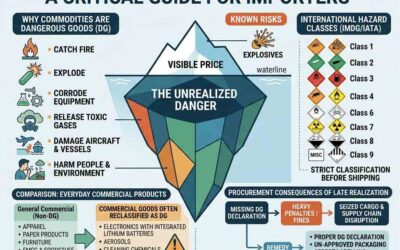
Many Importers Don’t Realize They’re Shipping Dangerous Goods Until It’s Too Late
Read More Articles