
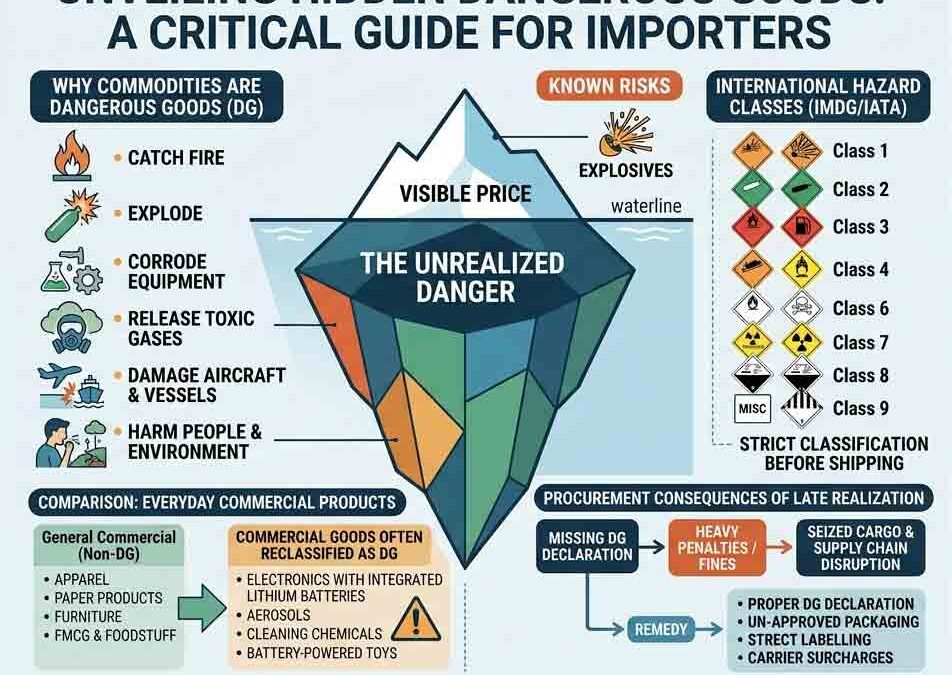
Many importers mistakenly think that only explosives are DG (Dangerous Goods).
In reality, many everyday commercial products are classified as Dangerous Goods because they can:
Proper DG declaration, packaging, labeling, documentation, and carrier approval are essential before shipment.
When you dive into the DG (Dangerous Goods) sector—also known as Hazardous Materials (HAZMAT)—items are strictly divided into 9 international hazard classes. These classifications are standardized worldwide across air, sea, and land transport to ensure safety.
1. General Commercial Goods (Non-DG)
These are everyday stable products that don't pose chemical, structural, or environmental risks during transit:
- Dry Goods: Apparel/textiles, paper products, furniture, plastic housewares.
- Electronics: Basic hardware, wires, or appliances without integrated lithium batteries.
- FMCG & Foodstuff: Packaged foods, grains, and non-hazardous liquids.
2. Dangerous Goods (DG) Classifications
Dangerous goods aren't just industrial chemicals; many are common commercial items you might not expect. They are categorized by their specific chemical and physical risks:
Why This Matters for Commercial Supply Chains
Shipping DG goods requires specialized UN-approved packaging, strict hazard labeling, specialized dangerous goods declarations (like a HazDec), and often carrier surcharges. If you are dealing with cross-border logistics or customs clearances, missing a DG declaration can lead to heavy penalties or seized cargo.